OSHA mandates a dedicated confined space standby rescue team whenever workers enter a permit-required confined space and non-entry rescue systems are ineffective. Meeting confined space rescue requirements Arizona contractors face requires strict adherence to both federal OSHA and state ADOSH regulations.
If your crew works inside silos, municipal sewer lines, or complex manufacturing tanks, relying on 911 is a massive liability. Fire departments do not guarantee the response times OSHA demands for atmospheric hazards. You must provide a qualified, on-site rescue team capable of immediate intervention.
Understanding Confined Space Rescue Requirements Arizona
The Occupational Safety and Health Administration (OSHA) defines a confined space as a space large enough for a worker to enter, with limited entry or exit points, and not designed for continuous human occupancy.
A permit-required confined space (PRCS) introduces serious hazards. A space becomes permit-required if it contains:
- A hazardous atmosphere (or the potential for one).
- Material that could engulf an entrant.
- Internal geometry with inwardly converging walls or a floor that slopes downwards and tapers to a smaller cross-section.
- Any other recognized serious safety or health hazard.
When your workers enter a PRCS, OSHA standard 1910.146 (for general industry) and 1926.1200 (for construction) dictate the safety protocols. Both standards require a detailed rescue plan.
When a Dedicated Confined Space Standby Rescue Arizona Team is Mandatory
OSHA prefers non-entry rescue. This involves attaching the entrant to a retrieval line connected to a mechanical device like a tripod and winch. If the worker becomes unresponsive, the attendant simply cranks them out without entering the space.
However, non-entry rescue is frequently impossible or dangerous. A dedicated on-site rescue team is legally required in the following scenarios:
Obstructions and Entanglement Hazards
If a space contains internal baffles, piping, or machinery, a retrieval line will snag. Dragging an unconscious worker around corners with a winch will cause severe injuries. If the retrieval line cannot provide a clear vertical pull, you need an entry rescue team on standby.
Detached Entrants
Sometimes workers must disconnect from their retrieval lines to reach the work area. The moment an entrant disconnects, non-entry rescue becomes impossible. A standby team must be ready at the portal to perform an entry rescue.
IDLH Atmospheres
An atmosphere that is Immediately Dangerous to Life or Health (IDLH) gives you a tiny window for rescue. If the space contains deadly gas or lacks oxygen, brain damage begins in four minutes. OSHA requires rescue teams to reach the victim within a timeframe appropriate for the hazard. For IDLH spaces, this means the rescue team must be suited up, on-site, and ready to enter in under three minutes.
Complex Internal Geometry
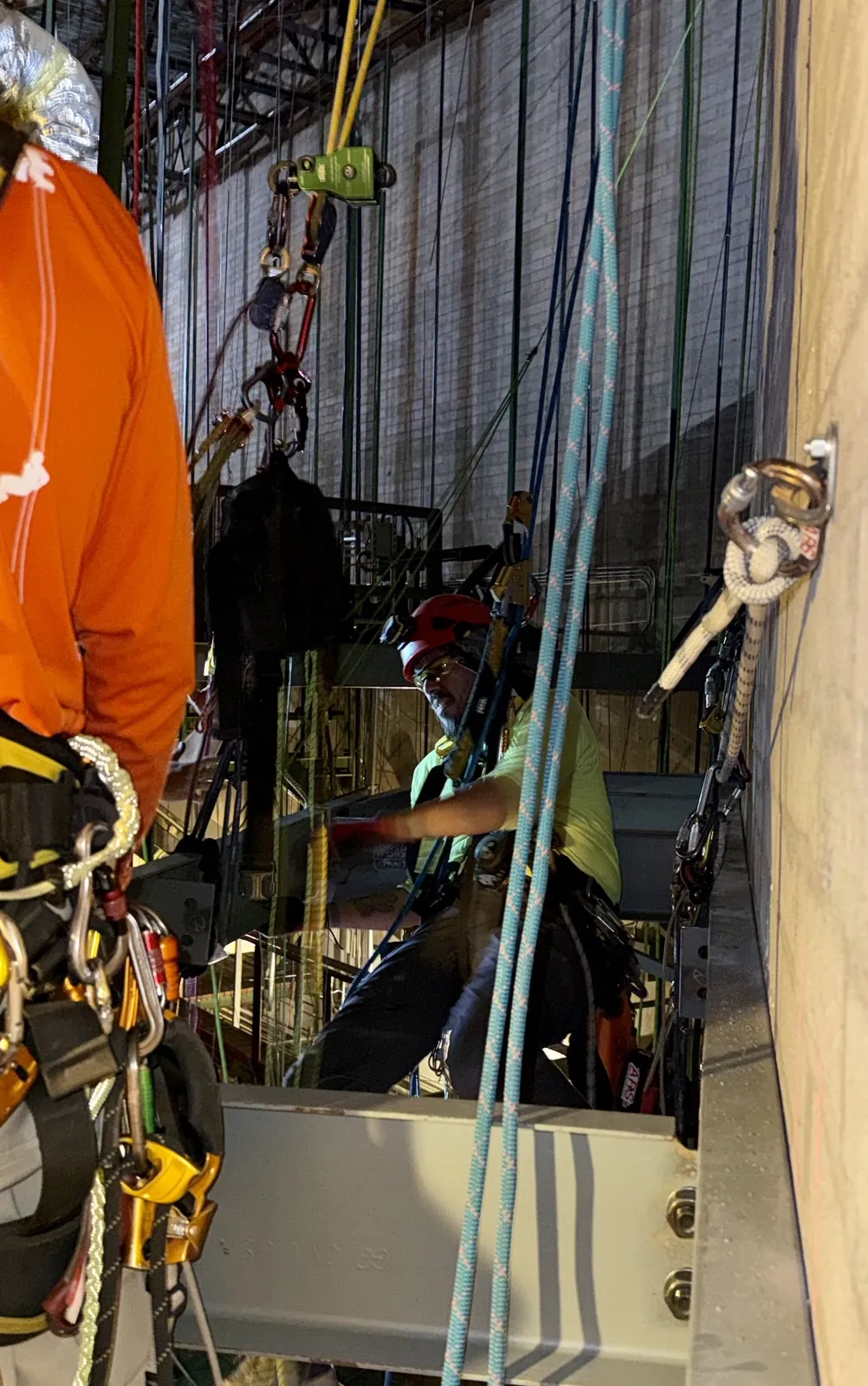
Spaces requiring horizontal movement, climbing over obstacles, or navigating multiple levels defeat non-entry retrieval systems. Rescuers must physically enter, package the patient in a sked or litter, and manipulate them through the structure.
Why Calling 911 Violates OSHA Standards
Many contractors mistakenly list the local fire department on their confined space permit under "Rescue Services." This is a fast way to earn an OSHA citation.
OSHA requires employers to evaluate a prospective rescue service before relying on them. You must verify that the service can respond in a timely manner and possesses the necessary equipment and training. Most municipal fire departments lack the staffing to sit on standby at your job site. If a fire department is engaged in another emergency, they cannot respond to your site in the three minutes required for an IDLH rescue.
Contractors must provide their own rescue personnel or hire a third-party standby team.
Evaluating Confined Space Rescue Services Phoenix
If you hire a third-party team, OSHA holds you responsible for verifying their capabilities. Do not hire a company without checking their credentials. A compliant rescue service must meet specific criteria.
Response Time and Availability
The team must be available for the entire duration of the entry. They cannot leave the site to grab lunch while entrants are inside the space. They must demonstrate the ability to reach the victim within the hazard-specific timeframe.
Specialized Training
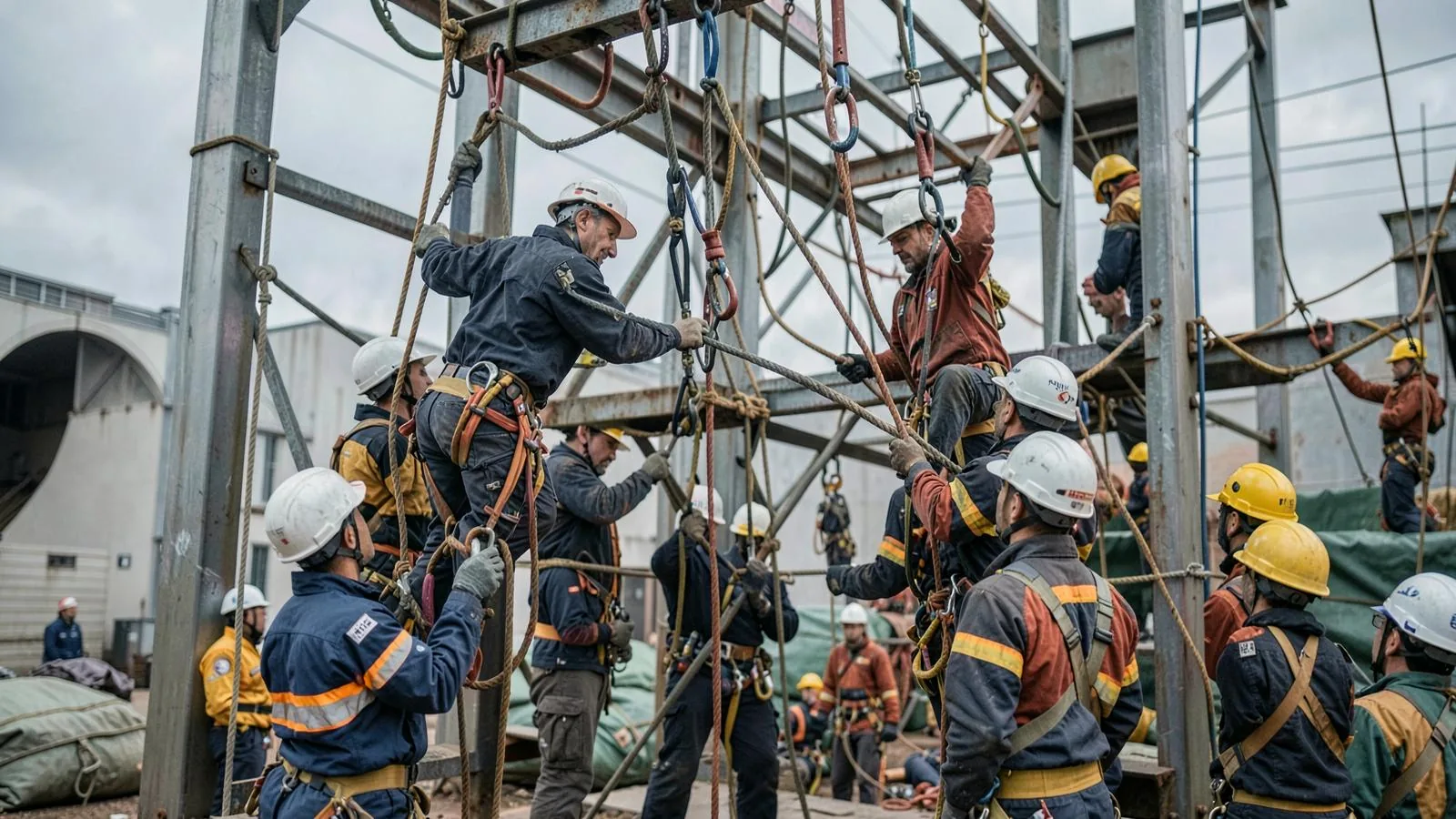
Rescuers must hold current certifications in CPR and basic first aid. At least one member of the rescue team must be CPR and first aid certified, though elite teams require this of all members. The team must also be trained in technical rope rescue and patient packaging. For spaces requiring high-angle drops or complex rigging, look for technicians with SPRAT Level III certifications.
Proper Equipment
The rescue team must provide their own gear. This includes atmospheric monitors, Self-Contained Breathing Apparatus (SCBA) or supplied air systems, ventilation fans, tripods, davit arms, and hauling systems. You must ask to see their equipment inspection and calibration logs.
Annual Practice Requirements
OSHA requires rescue teams to practice making confined space rescues at least once every 12 months. This practice must involve simulated rescues in spaces representative of the actual spaces they will enter. The spaces must match in terms of opening size, configuration, and accessibility. Ask prospective rescue teams for their training logs.
The Contractor's Responsibility for Pre-Entry Site Preparation
Before the rescue team arrives, the host employer or general contractor has strict legal obligations. You cannot simply point to a manhole and ask the rescue team to figure it out. You must provide a safe staging area and handle the initial hazard controls.
- Lockout/Tagout (LOTO): All energy sources entering the space must be isolated. This includes electrical lines, hydraulic systems, and pneumatic pipes. You must blind or block fluid and gas lines.
- Initial Atmospheric Testing: You must test the air before removing the cover. Test for oxygen levels, combustible gases, and toxic gases in that specific order.
- Ventilation: Set up blowers to flush the space with fresh air.
- Information Sharing: The host employer must inform the rescue team of any specific hazards known to exist in the space, such as previous chemical storage or structural weaknesses.
Construction vs. General Industry Confined Space Rules
Arizona contractors must know which OSHA standard applies to their project. Maintenance work at a manufacturing plant falls under General Industry (OSHA 1910.146). Building a new water treatment facility falls under Construction (OSHA 1926.1200).
The construction standard includes stricter requirements for coordination. A competent person must evaluate the job site and identify all confined spaces before any work begins. If multiple contractors are working on the site, the controlling contractor must coordinate the entry operations. This prevents one crew from accidentally dumping toxic fumes into a space occupied by another crew. The rescue team must be briefed on all overlapping activities.
What to Expect Regarding Costs
Pricing for standby rescue depends on the complexity of the space, the duration of the project, and the hazards involved.
A standard two-person rescue team handling a straightforward vertical entry might cost between $1,500 and $2,000 per day. If the space features an IDLH atmosphere, complex internal structures, or high-angle rope access requirements, you will need a three to four-person team. This increases the daily rate to a range of $2,500 to $4,000.
When budgeting, factor in the cost of site walks and rescue plan development. A professional rescue provider will visit the site before the job begins to assess anchor points, measure portal openings, and draft a site-specific rescue plan.
Secure Your Job Site with Professional Rescue Oversight
Ignoring confined space regulations puts your crew at risk and exposes your company to massive fines. You need a dedicated, highly trained team to manage atmospheric hazards and complex technical rigging.
American Rescue and Safety LLC provides specialized confined space standby rescue and rescue preparedness programs for contractors across Arizona. We supply fully equipped SPRAT-certified technicians, complete hazard assessments, and site-specific rescue plans. Our teams handle everything from basic municipal tank entries to complex industrial difficult access solutions.
We operate out of Litchfield Park, AZ, and are available 24 hours a day via email, WhatsApp, or text to support your project schedule.
Contact American Rescue and Safety LLC today to schedule a site walk and secure your standby rescue team.