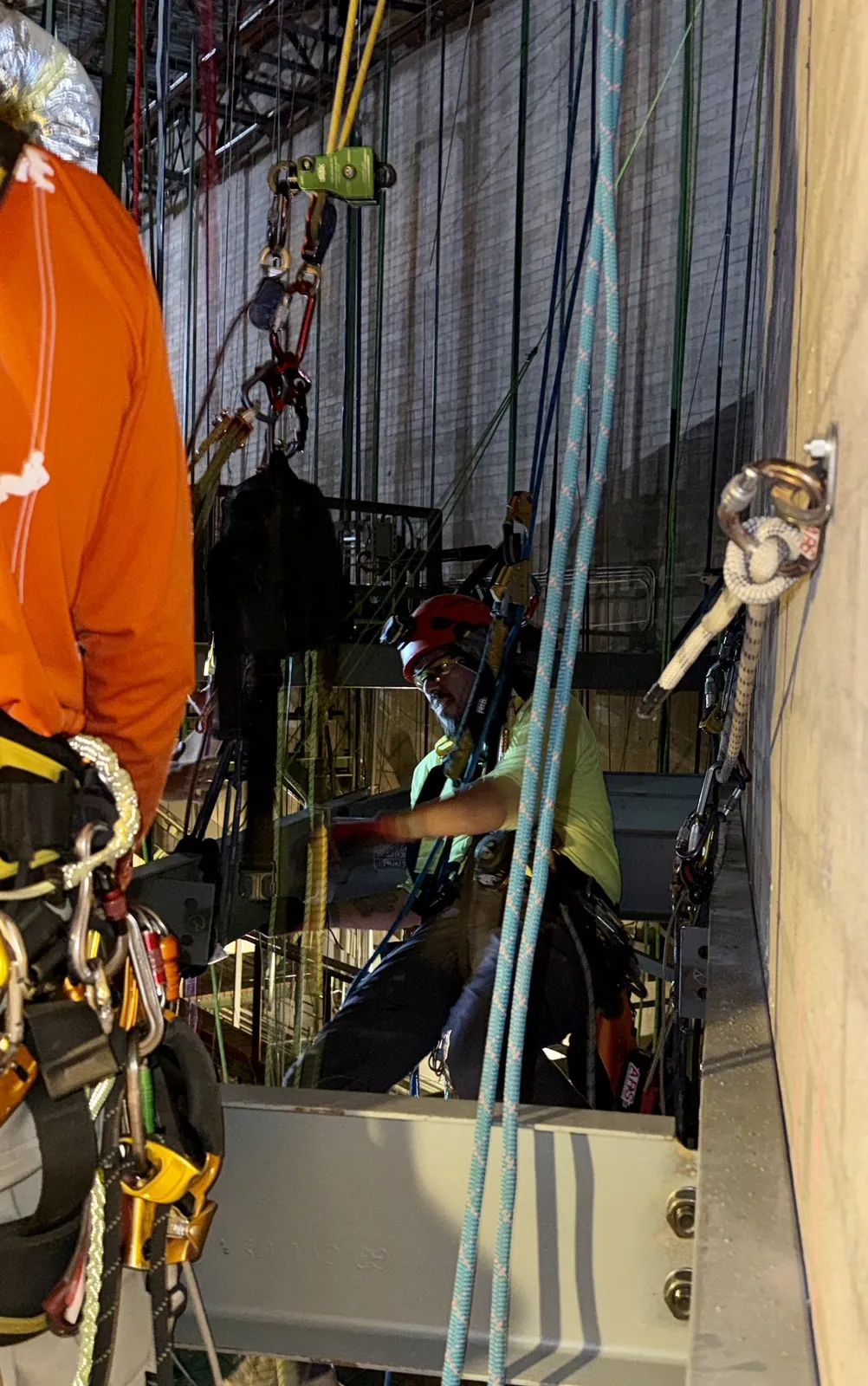
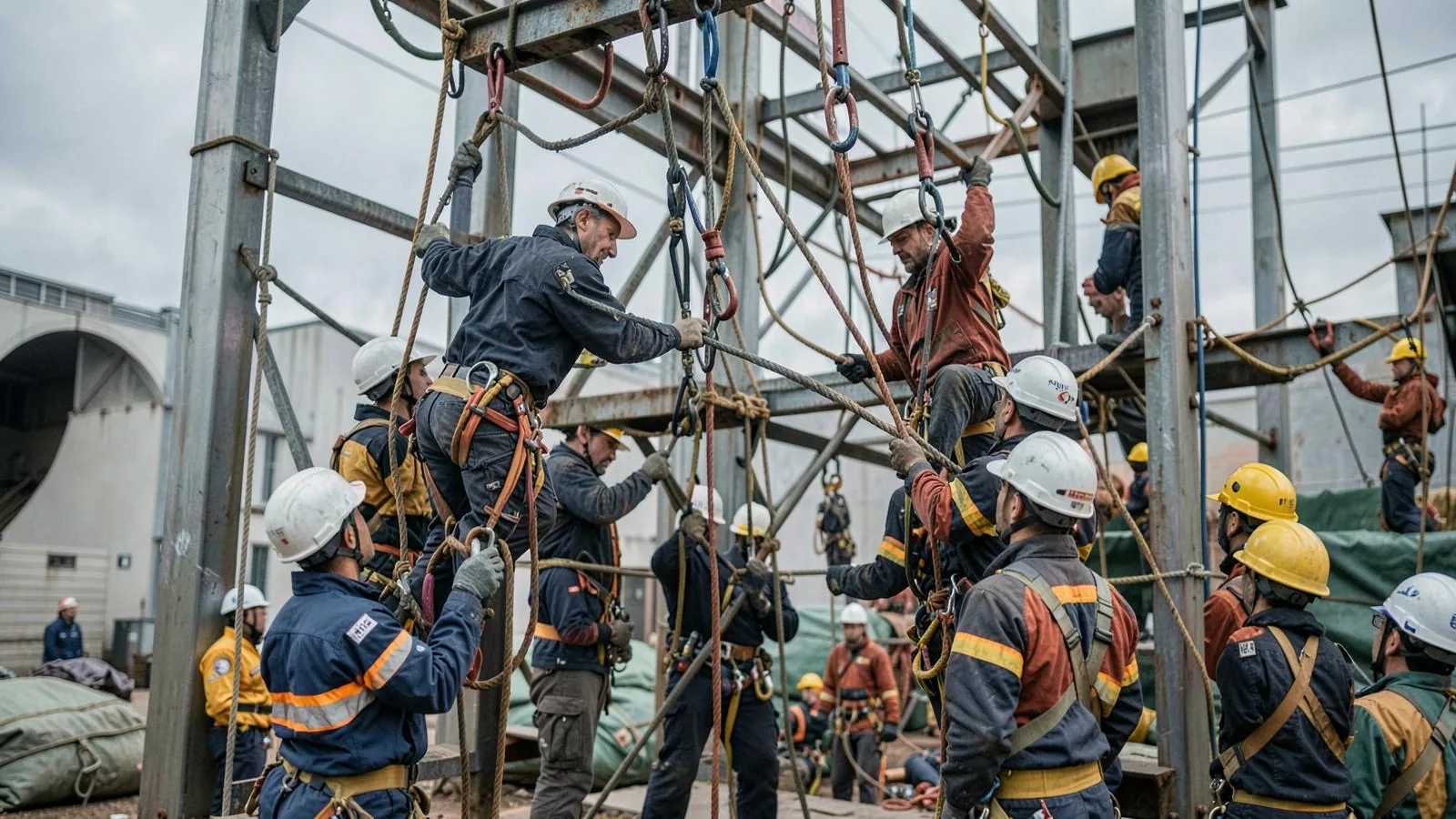
Maintenance employers must protect their workers from leading edge hazards and fragile roof surfaces. Generic online safety videos fail to meet OSHA standards for site-specific instruction. Providing proper rooftop fall protection training Litchfield Park AZ contractors and facility managers can rely on requires evaluating your specific roof conditions, the exact gear your team uses, and your mandatory rescue plan. When your HVAC technicians or maintenance crews work at height, you need hands-on, compliant instruction.
OSHA standard 1910 Subpart D regulates general industry fall protection, while 1926 Subpart M covers construction. Both standards require employers to train workers on recognizing fall hazards and using the correct systems to mitigate them. A compliant training program must translate these federal regulations into practical steps for your exact work environment.
Choosing Rooftop Fall Protection Training Litchfield Park AZ
Effective roof maintenance safety training requires an instructor who understands your daily operations. A qualified training provider will assess your building structures before the class begins. This ensures the instruction matches the reality your workers face on the roof.
Employers must distinguish between Authorized User training and Competent Person training. An Authorized User is a worker trained to safely use fall protection equipment to do their job. A Competent Person is a designated supervisor capable of identifying existing and predictable hazards, with the authorization to take prompt corrective measures to eliminate them. Your facility likely needs a mix of both. The Competent Person designs the fall protection plan and selects the anchor points. The Authorized Users execute the work according to that plan.
Your training program must include physical demonstrations. Workers must put on harnesses, connect to lifelines, and practice inspecting their gear. Classroom theory alone does not satisfy OSHA training requirements for fall protection.
Matching Training to Your Specific Roof Conditions
Arizona commercial buildings present distinct architectural and environmental challenges. Your training must address the specific geometry and material of your roofs.
Low-Slope and Flat Roofs
Many commercial structures in Litchfield Park feature flat roofs housing large HVAC units, ventilation fans, and telecom equipment. Workers servicing this equipment often operate dangerously close to unprotected edges. Training for these environments must cover the use of warning line systems and designated safety monitors. OSHA requires warning lines to be erected at least 15 feet from the unprotected edge if no other fall protection is used and the work is both infrequent and temporary. Your workers must know how to measure this distance and set up the flags correctly.
Fragile Surfaces and Skylights
OSHA treats a skylight exactly like a hole in the roof. Older industrial buildings frequently have fiberglass skylights that become brittle after years of intense Arizona sun exposure. Stepping on a degraded skylight results in a catastrophic fall. Training must teach workers how to identify fragile roof materials. Instructors must cover the installation of approved skylight screens, guardrail barricades, or temporary covers capable of supporting at least twice the weight of employees and equipment.
Parapet Walls
If a roof has a parapet wall that is at least 39 inches high, OSHA considers the edge protected. However, many building facades create the illusion of a tall parapet from the ground while offering only a 10-inch lip on the roof side. Training must teach workers how to measure parapets and determine if active fall protection is still required.
Essential Equipment Covered in Rooftop Safety Training
A comprehensive training program breaks down fall protection into passive systems, active restraint, and active arrest.
Passive Fall Protection Systems
Passive systems require no active participation from the worker once installed. These include guardrails and hole covers. Training covers the structural requirements for temporary guardrails. The top edge height of top rails must be 42 inches plus or minus 3 inches above the walking surface. The guardrail system must be capable of withstanding a force of at least 200 pounds applied in a downward or outward direction.
Fall Restraint Systems
Fall restraint is always preferable to fall arrest. A restraint system uses a harness and a fixed-length lanyard to physically prevent the worker from reaching the fall hazard. The worker is tethered like a dog on a short leash. Training must cover how to select an anchor point and calculate the maximum lanyard length needed to reach the work area without allowing the worker's center of gravity to cross the leading edge.
Active Fall Arrest Systems
When a worker must work directly at the edge, fall arrest systems are required. These systems stop a fall that is already in progress. Training focuses on the ABCs of fall arrest: Anchorage, Body Wear, and Connecting Devices.
- Anchorage: OSHA requires anchor points used for personal fall arrest systems to support at least 5,000 pounds per employee attached. Workers must learn the difference between engineered anchor points permanently installed on the roof and temporary anchor straps tied around structural steel. Training must explicitly ban tying off to weak structures like PVC pipes, roof vents, or electrical conduits.
- Body Wear: Workers must wear a full-body harness. Belts are illegal for fall arrest. Training includes hands-on practice donning the harness. Instructors must teach workers how to adjust the leg straps tightly enough to prevent injury during a fall, ensuring the dorsal D-ring rests squarely between the shoulder blades.
- Connecting Devices: Workers use shock-absorbing lanyards or self-retracting lifelines (SRLs) to connect their harness to the anchor. Training must cover the specific application of each device, particularly the dangers of using standard SRLs over sharp leading edges which can sever the cable during a fall.
Calculating Fall Clearance
One of the most critical math skills taught in rooftop safety training is calculating fall clearance. If a worker falls, the system must stop them before they hit the lower level. Workers must learn to add their free fall distance, the deceleration distance of the shock absorber tearing open, their own height, and a mandatory safety factor. If the total clearance required is 18 feet, but the roof is only 12 feet above the ground, a traditional shock-absorbing lanyard will fail to prevent a fatal impact.
Mandatory Rescue Procedures and Suspension Trauma
Many employers falsely believe that providing harnesses and lanyards satisfies their safety obligations. OSHA standard 1926.502(d)(20) mandates that employers must provide for prompt rescue of employees in the event of a fall, or assure that employees are able to rescue themselves.
Calling 911 does not constitute a compliant rescue plan. Most municipal fire departments lack the specialized high-angle rescue equipment and immediate availability to perform a rapid roof rescue.
When a worker falls and is suspended in a harness, gravity causes blood to pool in their legs. This condition is known as orthostatic intolerance or suspension trauma. Because the leg muscles are not contracting to push blood back up to the heart, the brain is deprived of oxygen. A suspended worker can lose consciousness and suffer fatal cardiac arrest in as little as 10 to 15 minutes.
Your fall protection training must cover immediate rescue protocols.
- Suspension Trauma Relief Straps: Workers must learn to deploy these small pouches attached to their harness. They loop the straps together to create a step, allowing them to stand up in their harness and restore blood circulation while awaiting rescue.
- Peer Rescue: The training must equip the on-site team with the skills to retrieve a fallen coworker. This involves using pre-rigged mechanical advantage hauling systems, rescue poles to attach clips to the victim's D-ring, and safe hauling techniques that do not put the rescuers at risk of falling.
Fall Protection Training Arizona Compliance and Documentation
Arizona operates under an OSHA-approved state plan overseen by the Arizona Division of Occupational Safety and Health (ADOSH). ADOSH heavily enforces fall protection standards across both construction and general industry sectors in Maricopa County.
Employers must maintain written certification records proving that every worker has been trained. The certification must contain the name of the employee trained, the date of the training, and the signature of the person who conducted the training or the signature of the employer.
Retraining is not strictly bound to an annual calendar date, but OSHA and ADOSH require retraining under specific conditions. You must retrain a worker when changes in the workplace render previous training obsolete, when changes in the types of fall protection systems or equipment occur, or when an employer observes a worker demonstrating inadequate knowledge of safety procedures. The best practice for commercial contractors and property managers is to mandate formal retraining every two years, with documented competent person reviews annually.
Schedule Your Site-Specific Safety Training
Protect your maintenance crews and maintain strict OSHA compliance with professional, hands-on safety instruction. American Rescue and Safety LLC provides expert training, safety consulting, and rescue planning tailored to your exact facility hazards and equipment.
Contact American Rescue and Safety LLC today to arrange your site assessment and training program.
Location: 20275 W EXETER BLVD Litchfield Park, AZ 85340
Office Hours: Monday - Friday: 8:00 AM - 6:00 PM Saturday: 10:00 AM - 4:00 PM Sunday: 10:00 AM - 4:00 PM
Available 24 hours a day for emergency support via email, WhatsApp, and text.